

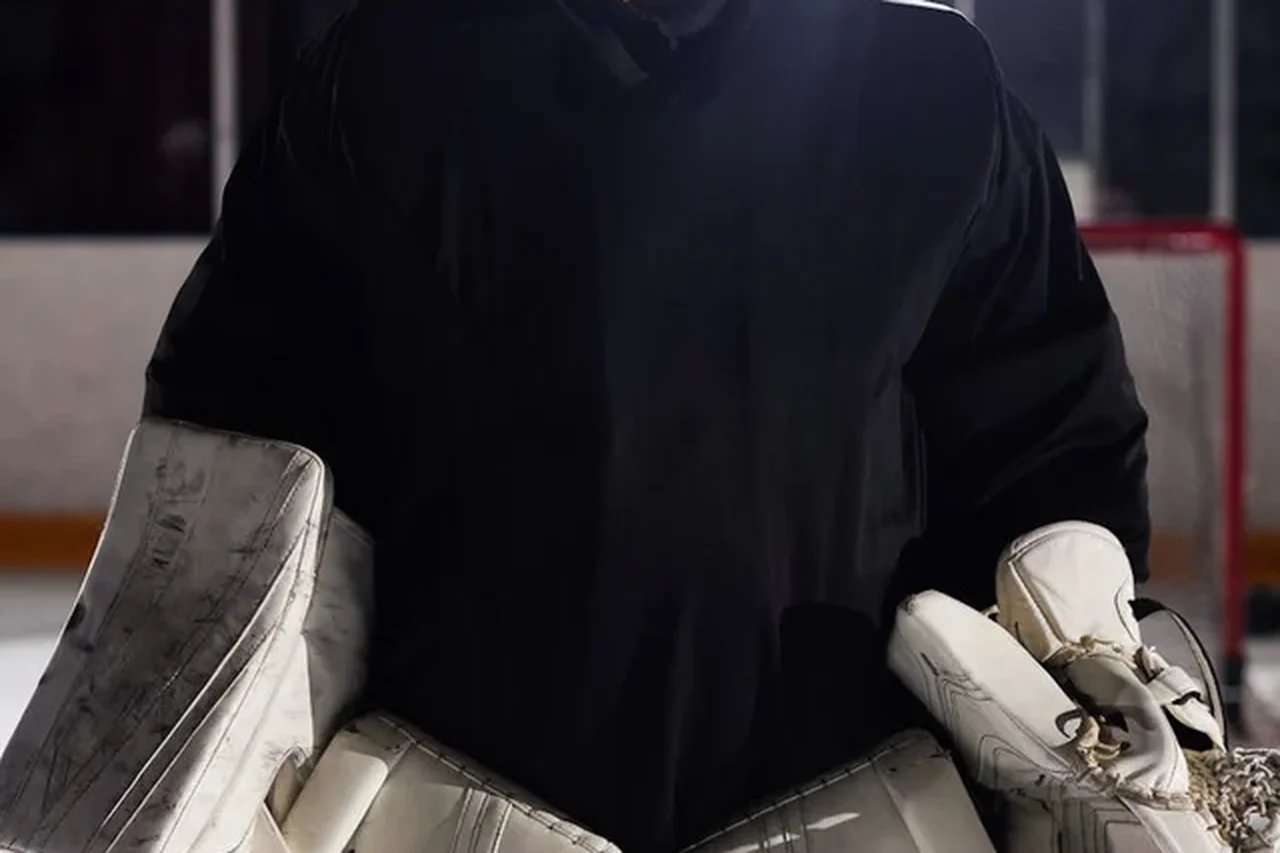
Jacques Plante: The Goalie Mask and a Goaltending Revolution
The history of the Montreal Canadiens is a tapestry woven with threads of unparalleled skill, dynastic dominance, and profound innovation. Among the most transformative chapters in this storied legacy is the tale of a man who, with a single act of self-preservation, altered the very fabric of his position and safeguarded the future of goaltenders forever. Jacques Plante’s decision to don a protective mask in regular-season play was not merely a personal choice; it was a catalyst for a goaltending revolution. This moment, born from necessity and forged in the crucible of competition, stands as a testament to the courage required to challenge tradition and the profound impact one individual can have on the National Hockey League. It is a story deeply embedded in the identity of the Habs, intertwining personal risk with the relentless pursuit of the Stanley Cup.
The Unprotected Era: Goaltending Before the Mask
To understand the magnitude of Jacques Plante’s innovation, one must first appreciate the perilous reality of his profession in the mid-20th century. For decades, goaltenders were expected to face a barrage of speeding pucks and swinging sticks with nothing but courage and cat-like reflexes for protection. The prevailing ethos was one of stoic bravery; to wear facial protection was, in the eyes of many, an admission of fear or a sign of weakness that could provide a psychological edge to the opponent.
The dangers were not hypothetical. Serious facial injuries, including broken bones, shattered teeth, and severe lacerations, were commonplace. Goaltenders were sewn up between periods and sent back onto the ice, their scars worn as badges of honor. This was the environment in which Plante, a supremely talented and uniquely cerebral netminder, plied his trade. His style was unorthodox; he was one of the first to regularly wander from his crease to handle the puck, effectively acting as a third defenseman. This proactive approach, while revolutionary, also increased his exposure to danger. The stage was set for a collision between an immutable tradition and an inevitable evolution in player safety.
The Man Behind the Mask: Jacques Plante’s Rise with the Canadiens
Jacques Plante’s path to the Montreal Canadiens was marked by a relentless work ethic and an innovative mind. Joining the Habs full-time in the 1953-54 season, he quickly established himself as the backbone of a team transitioning into its most glorious era. Playing behind legends like Maurice 'Rocket' Richard and Jean Béliveau, Plante’s role was critical. His goaltending was a cornerstone of the Canadiens' unprecedented run of five consecutive Stanley Cup championships from 1956 to 1960.
Plante was more than a shot-stopper; he was a student of the game. He meticulously studied shooters’ tendencies, kept detailed notebooks on opponents, and was a vocal leader on the ice. His technical contributions were vast, from popularizing the butterfly style’s precursors to perfecting the art of the glove save. However, his intelligence also made him acutely aware of the risks he faced. Suffering from asthma and prone to facial injuries, he had experimented with protective masks in practice for years, using a crude fiberglass model he crafted himself. Yet, the unspoken code of the NHL kept it shelved for game action. The Montreal Forum crowd, and the hockey world at large, still viewed the unmasked face as an integral part of the goaltender’s identity.
The Fateful Night: November 1, 1959
The catalyst for change occurred on a historic night at Madison Square Garden. On November 1, 1959, the Montreal Canadiens faced the New York Rangers. Early in the game, a hard shot from Andy Bathgate struck Plante squarely in the face, opening a deep gash on his nose and cheek. As was customary, he was rushed to the dressing room for stitches. But upon his return, Plante made a historic declaration to coach Toe Blake: he would not go back into the game without wearing his protective mask.
Faced with no alternative—backup goalies did not travel at the time—Blake reluctantly agreed, albeit with the stipulation that Plante discard the mask once the wound healed. The sight of Plante returning to the Montreal Forum ice later that week with the stark, form-fitting mask was jarring to fans and commentators. It was a visual break from centuries of hockey tradition. Yet, the results were impossible to ignore. The Canadiens went on an 18-game unbeaten streak with the masked Plante in net. The practical advantage silenced the critics; the mask stayed on. This single act of defiance, supported by immediate team success, shattered a long-standing taboo. For a deeper look at the coaching leadership during this era, explore our article on Toe Blake and the coaching dynasty that shaped these legendary teams.
Design and Evolution: From Plante’s Prototype to Modern Mastery
Jacques Plante’s original mask was a rudimentary but effective piece of equipment. Molded from fiberglass and resin to a plaster cast of his own face, it featured large eye holes and minimal interior padding. While it offered crucial protection from direct impacts, it had significant limitations: restricted peripheral vision, poor ventilation causing fogging, and a design that could channel the force of a puck’s impact across the entire face.
However, the dam had broken. Plante’s success legitimized the concept, and innovation followed. Throughout the 1960s and 70s, masks evolved. The introduction of the cage-and-helmet combination by other pioneers offered better visibility and airflow. The iconic “cat-eye” cage design became a staple. By the time the 1976-1979 Canadiens dynasty was dominating the league, most goaltenders wore some form of facial protection. The mask had transitioned from a peculiarity to a necessity.
The final step in this evolution was the development of the modern hybrid or composite mask. Utilizing advanced materials like carbon fiber and Kevlar, and designed with sophisticated curvature to deflect pucks, today’s masks are masterpieces of safety engineering. They are lightweight, offer maximum visibility and protection, and have become a canvas for artistic expression, often featuring elaborate paintings of team logos, like the iconic CH logo, or personal motifs. The journey from Plante’s homemade shell to today’s customized armor is a direct legacy of his courage.
The Ripple Effect: How the Mask Transformed Goaltending
The adoption of the mask did more than prevent injuries; it fundamentally changed the psychology, technique, and athleticism of the goaltending position.
Psychological Liberation: Without the primal fear of a disfiguring injury, goaltenders could play with greater confidence and concentration. They could challenge shooters more aggressively, stand their ground on screens and deflections, and focus purely on stopping the puck rather than instinctively protecting their face.
Technical Revolution: The new-found security allowed for the development and full commitment to techniques that would have been recklessly dangerous before. The modern butterfly style, which involves dropping to the knees and exposing the upper body, became viable. Goaltenders could now comfortably absorb shots with their shoulders and chest. The mask was the essential enabler for the positional and technical evolution that followed.
* A New Breed of Athlete: As fear diminished, the position could attract and develop a different type of athlete. The emphasis shifted even more toward agility, flexibility, and puck-handling skill. The legacy of this shift is evident in the careers of later Canadiens greats. A generation raised with the mask as a given, Patrick Roy, would later combine this technical freedom with a competitive ferocity to redefine the position again in the modern era, a story detailed in our guide to Patrick Roy's goaltending greatness.
Practical Insights: The Mask’s Legacy in Modern Goaltending Development
The mask’s integration into hockey is now so complete that its historical absence is a cautionary tale taught to young players. Its legacy provides several key insights for understanding the position today:
- Safety as a Foundation for Skill: Every young goaltender now begins their career wearing a mask. This universal standard ensures that from the earliest age, technical development is built on a foundation of safety, not fear. Coaches can teach proper positioning—like squaring up to the shooter or controlling rebounds with the body—without reservation.
- The Importance of Proper Fit and Care: Modern goaltending instruction emphasizes that a mask is not just equipment; it is essential gear. Young players are taught that a properly fitted mask is as crucial as well-sized skates. They learn the importance of secure straps, clear visors, and the regular inspection of the mask’s shell and padding for wear.
- A Symbol of the Position’s Identity: Far from the stigma Plante faced, the mask is now the most recognizable symbol of the goaltender. Its personalized designs celebrate the individuality and character of the player wearing it, while the shared experience of putting it on creates a unique bond among those who play the position.
Cementing a Legacy: Plante’s Place in Canadiens and NHL Lore
Jacques Plante’s contribution transcends statistics, though his are remarkable: six Stanley Cup championships with the Montreal Canadiens, seven Vézina Trophies, and the first Hart Trophy awarded to a goaltender in over 30 years. His true legacy is etched not on silverware, but on the face of every goaltender who has followed.
He demonstrated that innovation and tradition are not mutually exclusive, and that challenging entrenched norms could enhance both safety and performance. His courage directly protected the careers of countless netminders and allowed the art of goaltending to flourish into the dynamic, athletic discipline it is today. When fans at the Bell Centre watch a modern goaltender make a fearless save, they are witnessing the enduring impact of Plante’s decision over six decades ago at the old Montreal Forum.
His story is a fundamental strand in the broader tapestry of the Habs' history, a franchise built on a blend of legendary talent and transformative change. From the fiery scoring of Rocket Richard to the elegant leadership of Jean Béliveau, from the flowing brilliance of Guy Lafleur to the 24 Stanley Cup championships that adorn the banners, the Canadiens' story is one of excellence and evolution. Jacques Plante’s mask stands as one of its most profound and human innovations.
Conclusion
The narrative of Jacques Plante and his mask is more than a historical anecdote; it is a parable of progress. It reminds us that the enduring legacy of the Montreal Canadiens is built not only on victories and championships but on the courage to redefine what is possible. Plante’s act of self-preservation became a gift to the entire hockey world, revolutionizing a position and protecting its practitioners for generations to come. It is a pivotal moment in the National Hockey League’s journey toward prioritizing player safety.
This story is but one cornerstone in the vast and rich history of Les Canadiens de Montréal. The Molson family stewardship, the iconic CH logo, and the echoes of cheers in both the Forum and the Bell Centre all form part of an unparalleled heritage. To delve deeper into the epic saga of this franchise, from its founding to its record 24 Cups, we invite you to explore the central narrative in our comprehensive archive of the team's history and legacy.
Reader Comments (6)