

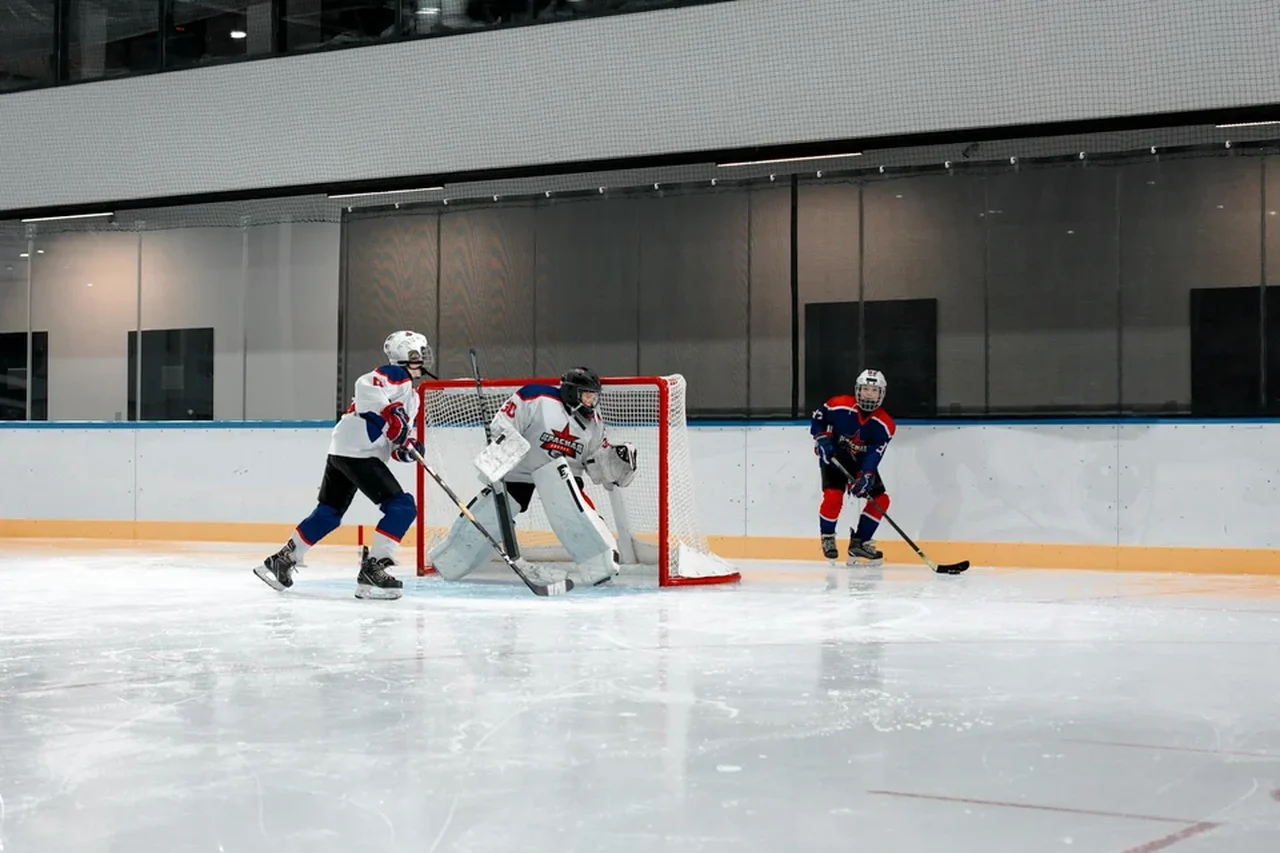
Canadiens vs. Soviet Red Army: The 1979 New Year's Eve Showdown
Executive Summary
On December 31, 1979, the hockey world held its breath. The Montreal Canadiens, the undisputed kings of the National Hockey League and in the midst of their legendary late-70s dynasty, faced a challenge not from a domestic rival, but from a foreign superpower. The Soviet Red Army team, a collection of the USSR's finest, skated into the hallowed Montreal Forum for a rare mid-season exhibition. This was more than a game; it was a clash of ideologies, playing styles, and hockey pride. For the Habs, riding a wave of four straight Cups, it was a test of their claim as the world's best against a team that had dominated international play. The result was a tense, tactical masterpiece that remains one of the most iconic and debated games in hockey history, a final, defining moment for a dynasty at its peak.
Background / Challenge: A Dynasty Meets Its Mirror Image
To understand the gravity of this game, you need to understand the two empires that collided.
The Montreal Canadiens of the late 1970s were a juggernaut. Under the Molson ownership and the brilliant management of Sam Pollock, the team was a perfect blend of homegrown talent and shrewd acquisition. They were the standard-bearers of the NHL, having just completed an unprecedented run of four straight Cups from 1976 to 1979. Their roster was a who's who of legends: Guy Lafleur's flowing hair and blistering speed, Larry Robinson's commanding presence on defense, and the goaltending duo of Ken Dryden and, by this time, a young Michel "Bunny" Larocque. They played a fast, skilled, and disciplined game that had conquered all comers in North America.
Across the ocean, the Soviet Red Army team (CSKA Moscow) was a different kind of machine. They were not a club team in the Western sense but a centralized unit of military personnel who trained together year-round. Their game was built on relentless conditioning, intricate passing patterns, and five-man-unit hockey that moved like a synchronized swarm. They had humiliated NHL All-Star teams in the 1979 Challenge Cup and, for a decade, had been the world's best on the international stage, winning Olympic gold and World Championships.
The challenge for the Canadiens was multifaceted. This was an exhibition game tucked into the grueling NHL schedule, but the stakes were immense. The pride of the league—and by extension, Canadian hockey—rested on their shoulders. Could the dynasty's proven formula of NHL excellence withstand the Soviet's scientific, system-based approach? Furthermore, the game was a massive event, broadcast across Canada on New Year's Eve. A loss at the Forum, the cathedral where legends from Maurice 'Rocket' Richard to Jean Béliveau had built the club's legacy of 24 Stanley Cup championships, would be unthinkable. The Habs weren't just playing for two points; they were defending an entire hockey culture.
Approach / Strategy: Discipline Over Emotion
The Canadiens' coach, the stoic and brilliant Scotty Bowman, knew that emotion could be a trap. Playing the "us vs. them" card might fire up the crowd, but it could also lead to the reckless, individualistic play that the Soviet system exploited. Bowman's strategy was one of cold, calculated discipline.
He prepared his team not for a war, but for a chess match. The focus was on defensive structure above all else. Bowman emphasized:
Patience: No chasing big hits or forcing plays. Let the Soviets make the first move and counter.
Positional Rigidity: The famed Soviet "passing carousel" worked by pulling defenders out of position. Bowman drilled his players to hold their zones, maintain tight gaps, and trust the system.
Capitalizing on Mistakes: The Soviet game was about precision. Bowman's game plan was to apply constant, smart pressure, wait for an errant pass or a rare turnover, and then strike with the Habs' superior finishing skill.
Special Teams Focus: Bowman knew even-strength play might be a stalemate. He prepared his power play units meticulously, believing they could be the difference-maker against the Soviets' disciplined but less physically aggressive penalty kill.
The message was clear: Do not try to out-Soviet the Soviets. Out-Canadian them. Play a smarter, more structured, and more patient version of the Montreal Canadiens' own game. It was about proving their system, honed over decades of chasing the Stanley Cup, could beat any system in the world.
Implementation Details: A Tense Night at the Forum
The atmosphere in the old Forum on December 31, 1979, was electric, but with a different energy than a typical playoff game. There was a palpable sense of curiosity and tension. Fans adorned in the iconic red, white, and blue with the proud CH logo on their chests weren't just cheering; they were studying.
From the opening face-off, the contrasting styles were on full display. The Red Army moved as a single entity, cycling the puck with mesmerizing short passes, probing for an opening. The Canadiens, as instructed, held their ground. They didn't run around. They checked, they shadowed, they waited.
The first period was a feeling-out process, a tactical duel with few clear chances. The Soviets controlled large stretches of puck possession, but found themselves funneled to the outside by Robinson and Serge Savard. The Habs' attacks were more direct, looking for Lafleur or Steve Shutt on the rush.
The game's first—and, as it turned out, only—goal came in the second period. It was a masterpiece of the Bowman strategy. The Canadiens applied a strong forecheck, forcing a Soviet defender into a hurried clearing attempt up the middle. Habs forward Mark Napier intercepted the pass at the blue line, stepped in, and fired a quick, low shot. The rebound popped to the side, where the relentless Guy Lafleur pounced and buried the puck past the legendary Soviet goaltender Vladislav Tretiak.
1-0 Canadiens.
The rest of the game was a masterclass in defensive hockey and nerve-wracking tension. The Soviets pressed, their passing patterns becoming even more intricate. The Habs blocked shots, cleared rebounds, and relied on the superb goaltending of Michel Larocque (Dryden was injured). There were no fights, no major penalties—just 60 minutes of intense, cerebral hockey. The Forum crowd roared with every cleared puck, every saved shot, understanding they were witnessing a unique brand of drama. The final minutes were an eternity, with the Soviet net empty for an extra attacker, but the Canadiens held firm.
Results: A 1-0 Victory for the History Books
When the final horn sounded, the scoreboard told a simple story: Montreal Canadiens 1, Soviet Red Army 0.
The numbers were stark and revealing:
1 Goal: The only goal of the game, scored by Guy Lafleur, assisted by Mark Napier.
0 Power-Play Goals: The game featured only two minor penalties per side. The special teams battle Bowman prepared for never materialized; the game was won at even strength.
~30 Saves for Larocque: While an official shot count is debated, Larocque was brilliant, earning a shutout in the biggest start of his career.
1 Historic Shutout: This was the first—and only—time the famed Soviet Red Army team was shut out by an NHL club during their series of exhibition tours.
But the result was about more than numbers. The Canadiens had done what no other NHL team could consistently do: they had beaten the Soviets at their own game of patience and structure. They didn't overpower them; they out-thought them. The victory was a massive point of pride for the National Hockey League and a validation of the Habs' dynasty. It cemented the 1976-1979 Canadiens not just as the best team in the world of professional hockey, but as a team that could successfully adapt and conquer the best international system.
For the Soviets, it was a rare defeat that they deeply respected. They acknowledged the Canadiens as the finest team they had ever faced. The game marked the end of an era of exhibition clashes, as the Cold War tensions soon escalated and such tours were suspended.
Key Takeaways: Lessons from a Hockey Chess Match
- System Over Stars: While the Habs were loaded with talent, they won by committing to a collective system designed to neutralize their opponent's greatest strength. It was a triumph of team strategy over individual brilliance.
- Adaptability is the Mark of Greatness: The late-70s dynasty proved its greatness wasn't just about dominating the NHL's style of play. It was about having the tactical depth and discipline to adapt and succeed against a completely different hockey philosophy.
- Defense Wins the Biggest Games: In a matchup billed as a clash of offensive titans, the game was decided by a single goal and impeccable team defense. It reinforced a timeless hockey truth.
- A Legacy-Defining Moment: This victory became the final, perfect chapter for that specific Canadiens dynasty. It was their last major challenge before the team's core began to age and change, making the win a symbolic capstone on their reign. You can explore more of these defining instances in our archive of /iconic-moments.
Conclusion: The Final Act of a Dynasty
The 1979 New Year's Eve game wasn't for the Stanley Cup, but it carried a weight all its own. It was the last, great stand of a Montreal Canadiens dynasty at the absolute peak of its powers. They had already stamped their names on the Cup a record four times in a row. On that night, they stamped their claim as the world's best team, full stop.
The game stands as a frozen snapshot in time. The flowing locks of Lafleur, the stoic focus of Bowman behind the bench, the red Soviet jerseys circling in the hallowed Forum, and the single red light flashing behind Tretiak. It was a clash of two hockey worlds that rarely touched, and when they did, it produced a 1-0 masterpiece.
Today, the echoes of that game can still be felt. When analysts talk about "playing the right way," or when a modern team employs a stifling neutral-zone trap, you can see shades of the strategy Bowman deployed. The legacy of those Habs is not just in the 24 Cups in the rafters of the Bell Centre, but in games like this one—a proof of concept that their brand of hockey could solve any puzzle.
It serves as a reminder to every generation of Habs fans, whether they remember the dynasties of Richard and Béliveau or the heroic goaltending of Patrick Roy, that the Montreal Canadiens' standard is global. The CH logo isn't just a symbol of NHL excellence; for one night in 1979, it was the standard for the world. And just as fans hoped during that /canadiens-2021-stanley-cup-final-run, the pursuit of that standard—the blend of skill, structure, and an unwavering will to win—is what forever defines Les Canadiens de Montréal.
Reader Comments (0)